Published - 8 years ago ( Updated - 8 years ago )
Docker has a lot of built-in log mechanisms to help us obtain service information executed in the container.
These mechanisms (mechanisms) we usually call logging drivers.
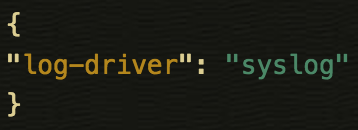
If you want to change the default logging drivers (logging drivers), you can set the name of the login-driver program in the daemon.json file. This file is usually placed in the /etc/docker directory of the linux system, or C:\ProgramData\docker\config\ on Windows
The default logging driver of Docker is json-file, change it to syslog.
On MacOS system, it can be set by Docker preferences:
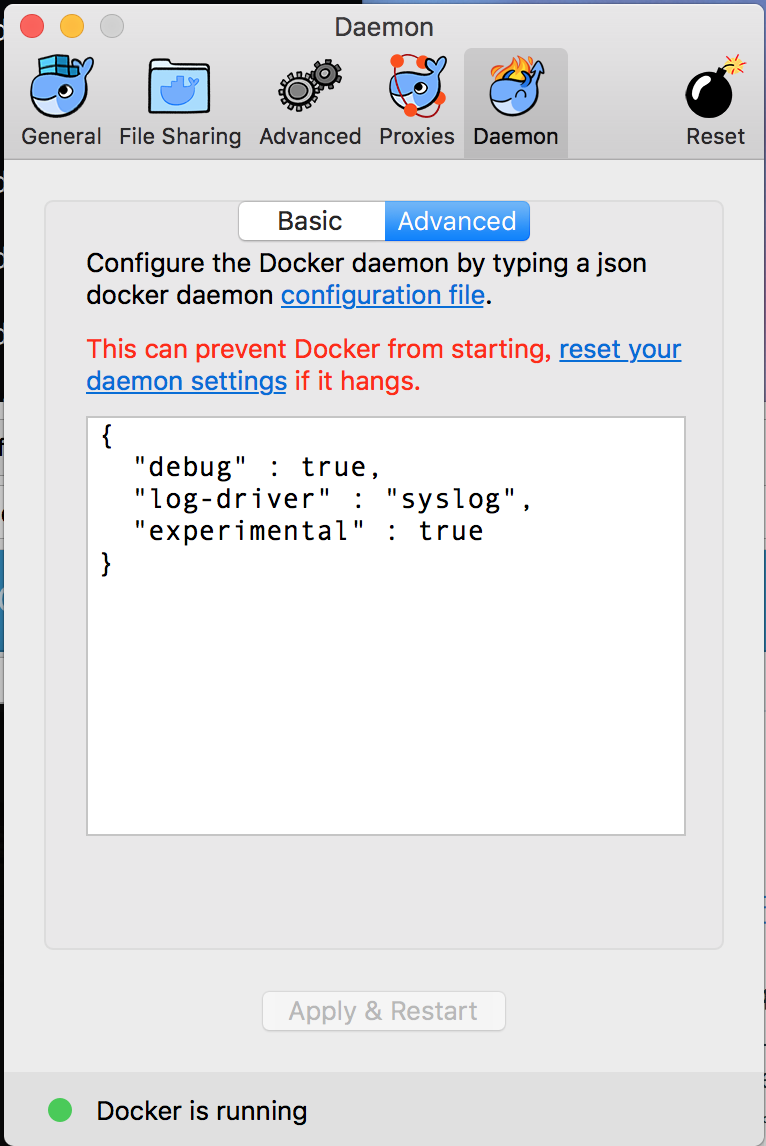
After restarting, you will find that the log records have changed to syslog.

For more configuration settings of Docker Deamon, you can refer to the official link:
https://docs.docker.com/engine/reference/commandline/dockerd/#daemon-configuration-file
Use the command to query the default Logging Driver.
These mechanisms (mechanisms) we usually call logging drivers.
If you want to change the default logging drivers (logging drivers), you can set the name of the login-driver program in the daemon.json file. This file is usually placed in the /etc/docker directory of the linux system, or C:\ProgramData\docker\config\ on Windows
The default logging driver of Docker is json-file, change it to syslog.
On MacOS system, it can be set by Docker preferences:
After restarting, you will find that the log records have changed to syslog.
For more configuration settings of Docker Deamon, you can refer to the official link:
https://docs.docker.com/engine/reference/commandline/dockerd/#daemon-configuration-file
Use the command to query the default Logging Driver.
docker info |grep Logging Below is a list of supported Loggin drivers:
| driver | Description |
|---|---|
none |
No logs will be available for the container and docker logs will not return any output. |
json-file |
The logs are formatted as JSON. The default logging driver for Docker. |
syslog |
Writes logging messages to the syslog facility. The syslog daemon must be running on the host machine. |
journald |
Writes log messages to journald . The journald daemon must be running on the host machine. |
gelf |
Writes log messages to a Graylog Extended Log Format (GELF) endpoint such as Graylog or Logstash. |
fluentd |
Writes log messages to fluentd (forward input). The fluentd daemon must be running on the host machine. |
awslogs |
Writes log messages to Amazon CloudWatch Logs. |
splunk |
Writes log messages to splunk using the HTTP Event Collector. |
etwlogs |
Writes log messages as Event Tracing for Windows (ETW) events. Only available on Windows platforms. |
gcplogs |
Writes log messages to Google Cloud Platform (GCP) Logging. |
logentries |
Writes log messages to Rapid7 Logentries. |
When I create a container with the docker run command,
Or when docker-compose starts, specify the logging driver to use.
For example, the dokcer on my Synolog Nas, Mo Ming ran a strange logging driver called db. (The following figure)
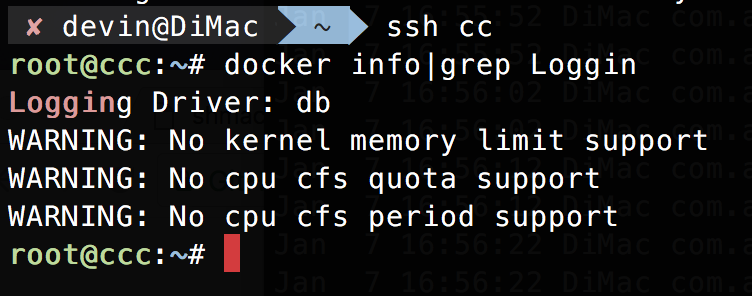
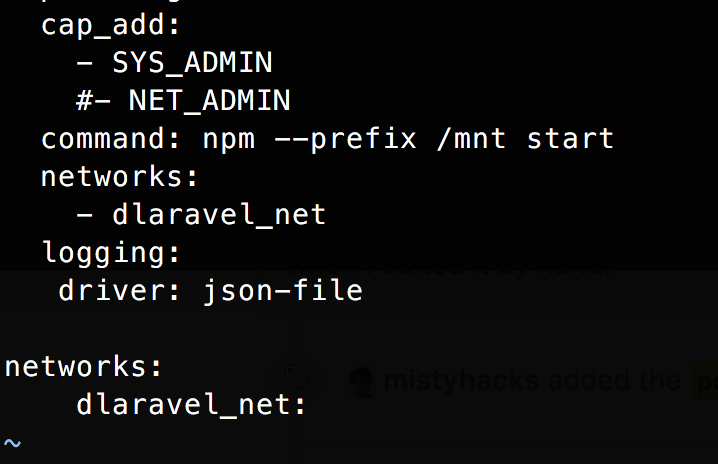
I want to execute json-file when my docker-compose starts.
you can make up
loggin:
driver: json-file



No Comment
Post your comment