by Devin Yang
(This article was automatically translated.)

Published - 9 years ago ( Updated - 9 years ago )

Normally, we use ./console restart to rebuild and execute contaiener.
Sometimes, we have multiple services and don't want to restart all services at once,
At this time, you can use ./console restart [servce name] to restart a specific service..

If you want to use this feature, it is recommended to update to the latest version of D-Laravel.

Let's look at the following example:
My Laravel project includes a chat room built with NodeJs, and I only want to restart the NodeJs service, not all containers.
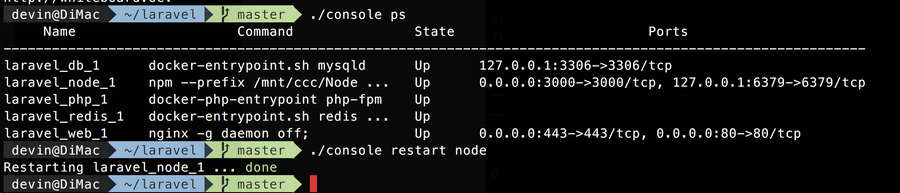
./console restart node


Tags: dlaravel

Devin Yang

Feel free to ask me, if you don't get it.:)

No Comment

Post your comment

Login is required to leave comments

Similar Stories


nginx,dlaravel

How to configure HTTPS on nginx to get an SSL A+ score from Qualys

This article describes how to adjust the ssl settings of nginx so that the website can obtain an SSL report and get an A+ rating. Here I am using letsencrypt free credentials. As long as you use the official Docker nginx new version image preset by D-Laravel, you should be able to achieve the same effect as mine. You can check your host SSL settings through the following. https://www.ssllabs.com/ssltest/index.html

dlaravel

How to start supervisor on D-Laravel

Since queue workers are a long-running program, we need a program manager supervisor to monitor whether the process on the Linux system is running continuously. For example, when the queue:work operation fails, the queue:work process can be automatically restarted. Fortunately, D-Laravel has a built-in supervisor, so you don't need to install it yourself to use it. This article briefly introduces how we start the supervisor in the container.

dlaravel

How to automatically detect and update the certificate issued by let's encrypt through getssl

It's really great that let's encrypt provides free certificates. However, is it a bit troublesome to update the certificate every three months? This article introduces how to generate multi-domain SAN certificate settings through getssl, and schedule automatic certificate renewal. It's very simple, just six steps to get it done.