Published - 8 years ago ( Updated - 8 years ago )
When we usually develop Laravel, sometimes field validation is performed, but the default message using Validator is in English.
But of course I want to have a more accurate display of Chinese message display,
This article describes how I use Laravel's Validator to customize Chinese messages.
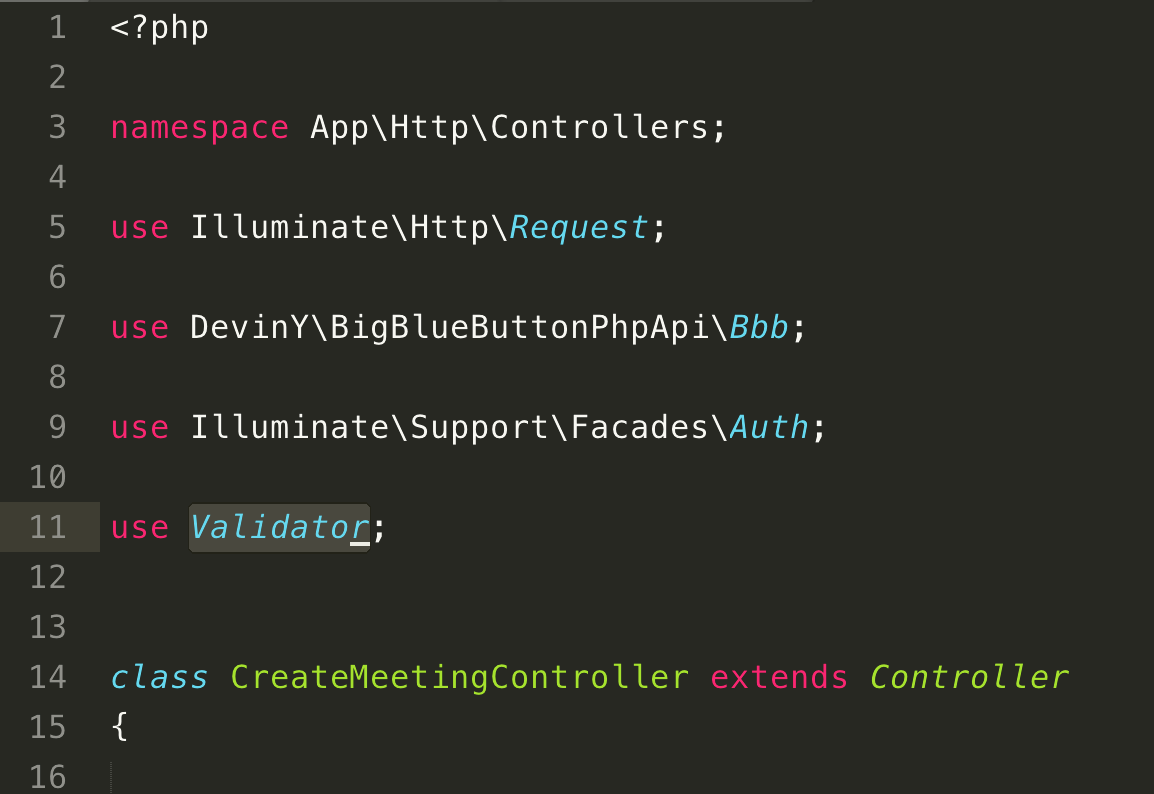
1. First, import the Validator on the Controller
2. Validator can accept three fields, the third is a custom error message...
For details, see the Custom Error Messages section of the official website:
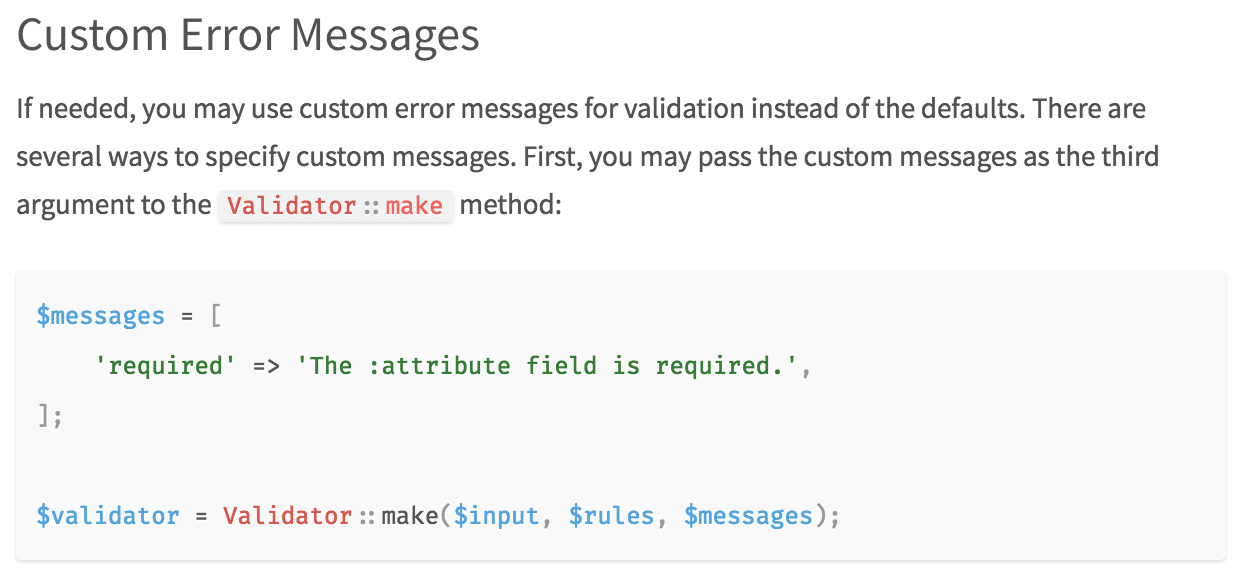
https://laravel.com/docs/5.5/validation#customizing-the-error-messages
The first input: the value passed in by the form $request->all().
The second rule: the rule of the field, for example here, my username is required and must be alpha.
The third message: the focus of this article, a custom error message.
The following picture captures the source code in my program:
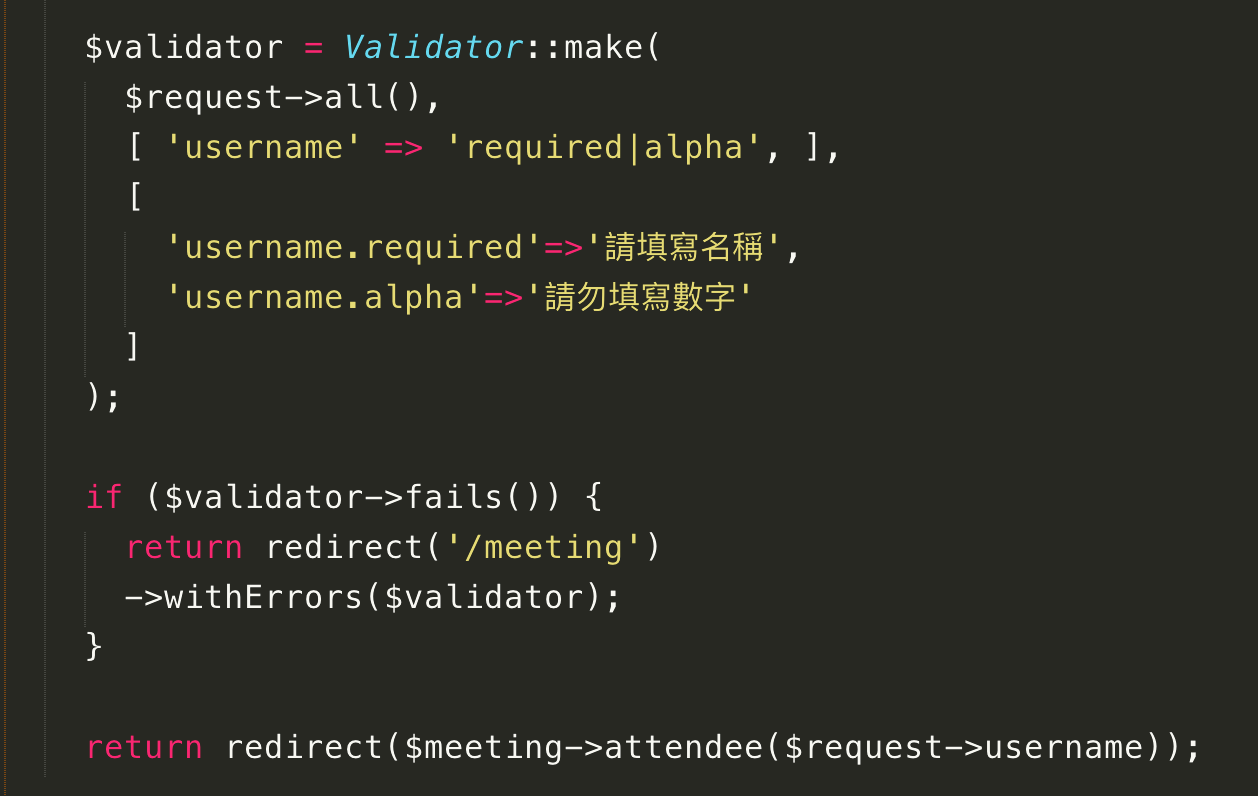
So when $validator->fails() fails to validate, it can be imported back to the form page/meeting.
If there is no verification failure, the Api will be called, the username filled in by the user will be passed in, and the URL to enter will be obtained.
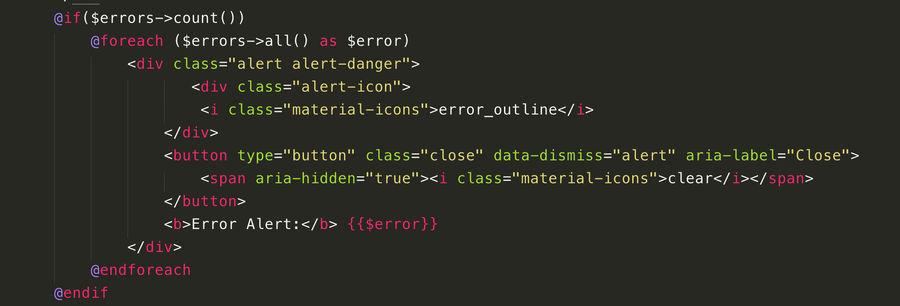
3. In the code of the form blade page.
$errors->count() to see if there is an error,
Different error using foreach loop,
Because there may be multiple fields and multiple errors, {{$error}} is the cause of the error.
But of course I want to have a more accurate display of Chinese message display,
This article describes how I use Laravel's Validator to customize Chinese messages.
1. First, import the Validator on the Controller
2. Validator can accept three fields, the third is a custom error message...
For details, see the Custom Error Messages section of the official website:
https://laravel.com/docs/5.5/validation#customizing-the-error-messages
$validator = Validator::make($input, $rules, $messages); can receive three parameters:The first input: the value passed in by the form $request->all().
The second rule: the rule of the field, for example here, my username is required and must be alpha.
The third message: the focus of this article, a custom error message.
The following picture captures the source code in my program:
So when $validator->fails() fails to validate, it can be imported back to the form page/meeting.
If there is no verification failure, the Api will be called, the username filled in by the user will be passed in, and the URL to enter will be obtained.
3. In the code of the form blade page.
$errors->count() to see if there is an error,
Different error using foreach loop,
Because there may be multiple fields and multiple errors, {{$error}} is the cause of the error.
test
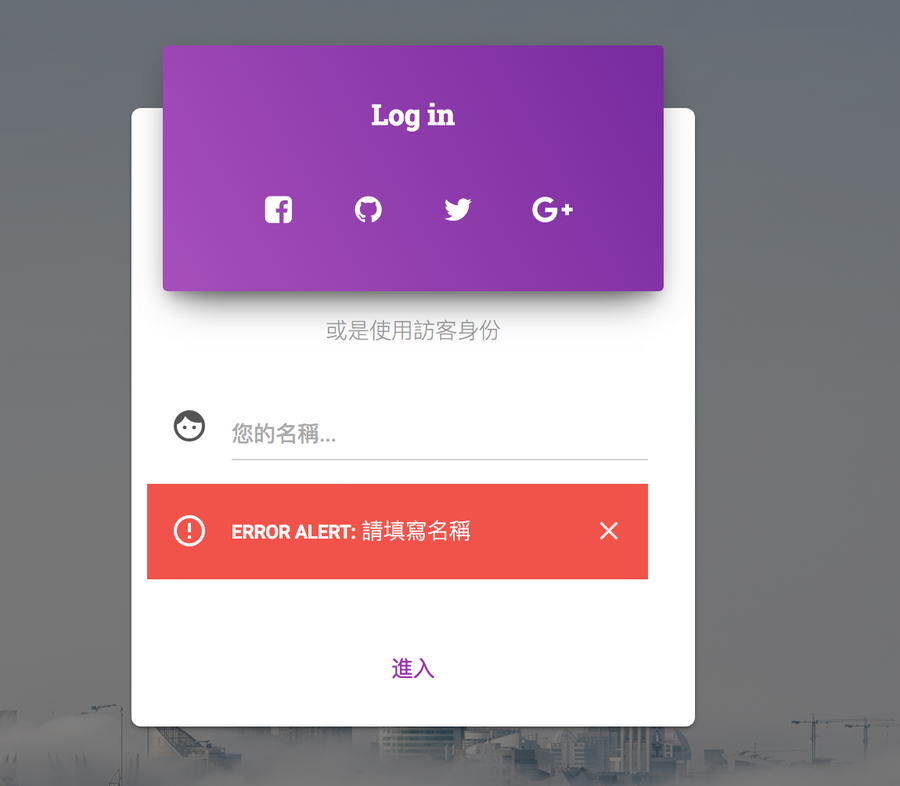
4. When the "Enter" button is pressed and the name is not filled in, a Chinese message of please fill in the name will appear.
5. If you only fill in 1234, press the "Enter" button, and a message " Do not fill in numbers " will appear.
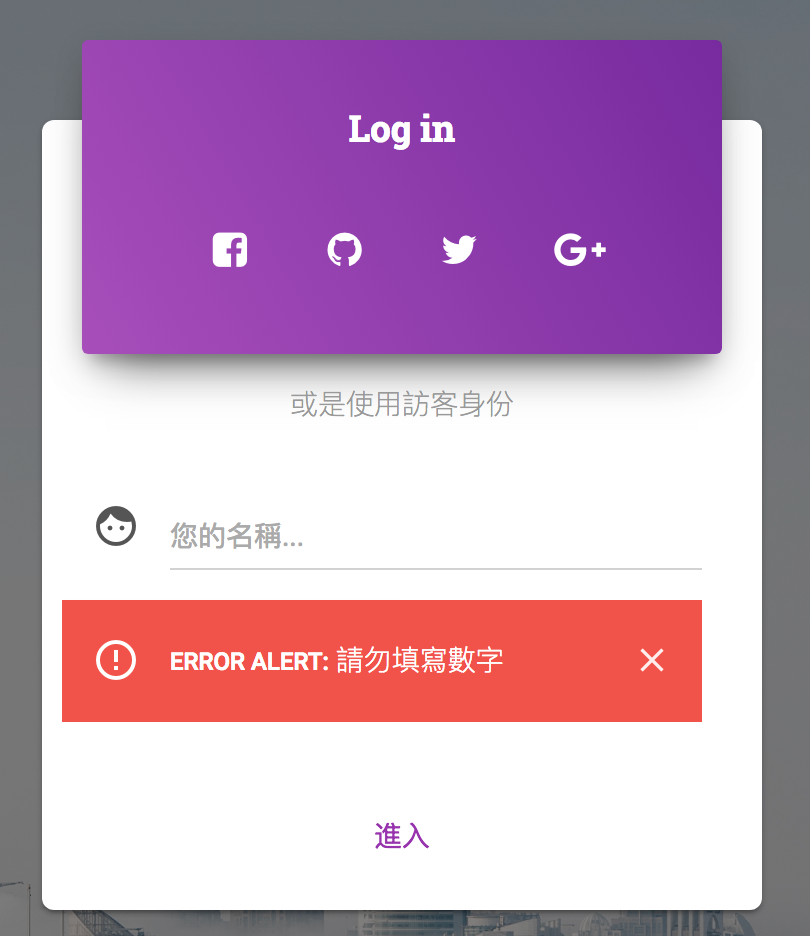
5. If you only fill in 1234, press the "Enter" button, and a message " Do not fill in numbers " will appear.



No Comment
Post your comment